Interview with Adelina Viteri, member of WUCWO’s Ecology Working Group
Adelina Viteri, originally from Guatemala and living in Italy for 43 years with her husband and three children, has represented WUCWO at the Human Rights Commission in Geneva since 2022 and, more recently, at the FAO in Rome. Since 2023 she has been part of WUCWO’s Ecology Group, an area she is deeply passionate about because it focuses on caring for our common home. The group, made up of several WUCWO members, decided from the beginning to join forces to contribute “a grain of sand” to the health of the planet. This is how the campaign “WUCWO Planting Hope” was born and launched, inviting every WUCWO member to plant at least one tree per year from 2024 to 2027.
– Adelina, you have helped plant 400 trees in Guatemala. Where did this initiative begin?
The initiative arises from the critical situation in Guatemala, where there is a strong imbalance between reforested and deforested areas. This makes the participation of youth and communities in reforestation essential, as well as education to prevent forest fires and promote more responsible agricultural practices.
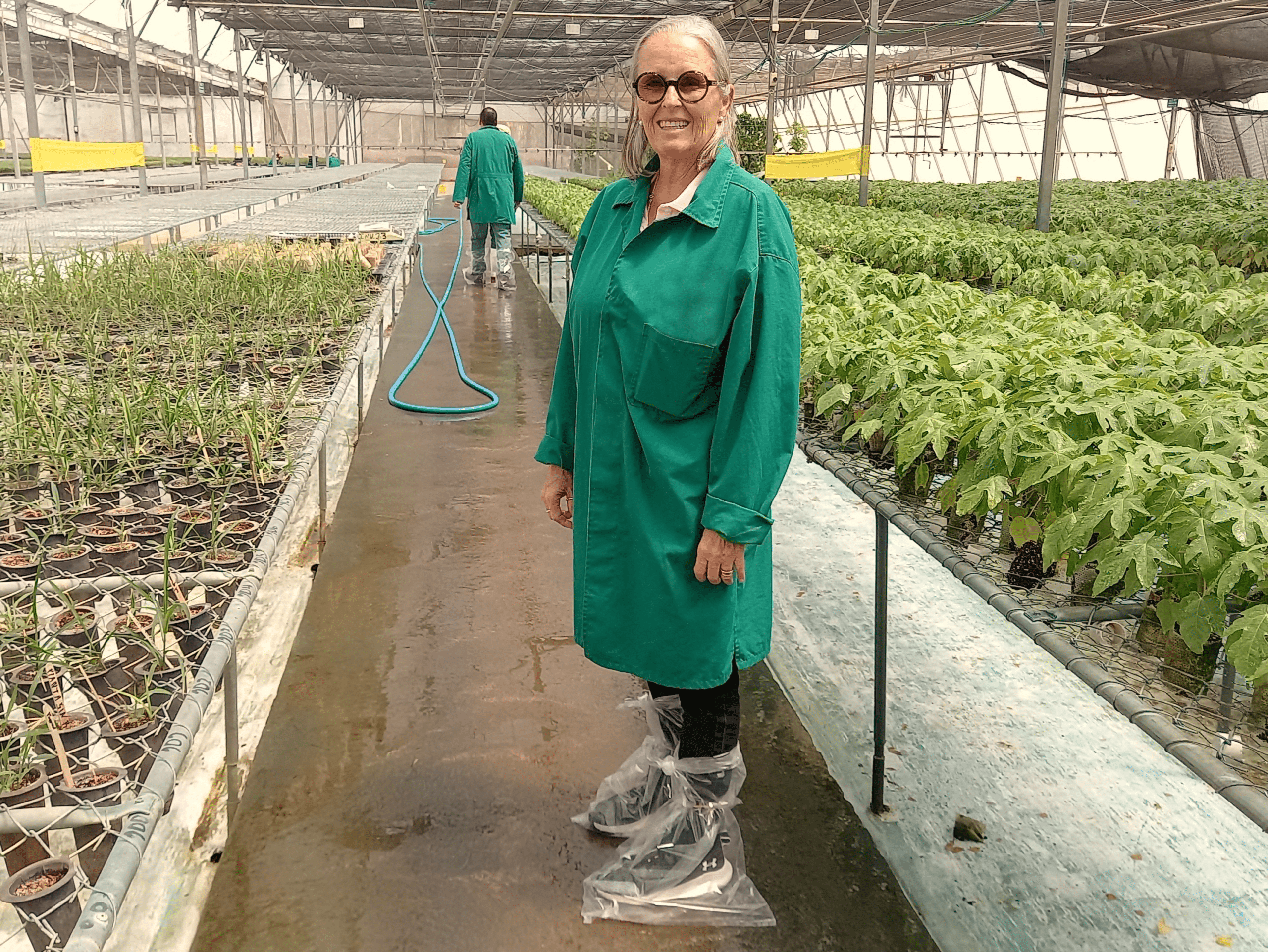
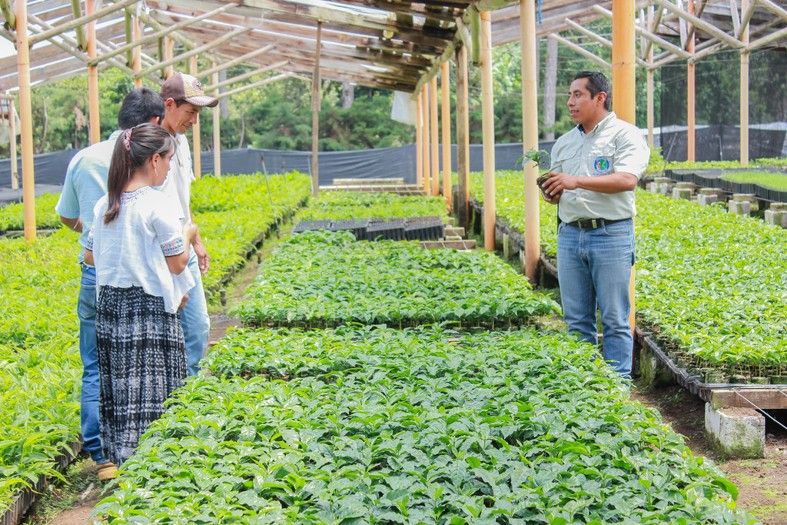
The contact with the projects in Guatemala came through a local company working with forest nurseries. They grow the trees from seed until they are ready to be planted, always prioritizing native species that adapt better to the climate and soil.
My personal involvement began thanks to my three children, who decided to give me something meaningful for my birthday: the planting of 400 trees.
– And how is the project developed?
In Petén, in the north of the country, the annual reforestation program focuses on native species because of their resilience and natural adaptation. Planting takes place during the rainy months to support early growth.
The project aims not only to plant trees but also to create community nurseries and strengthen environmental awareness. Collaboration with municipalities and the National Forestry Institute is key. It is also a long-term effort: trees need years to grow, allowing communities to accompany and take responsibility for their development, fostering hope in the new generations.
Starting next year, areas dedicated to local wildlife will also be recreated, as deforestation is eliminating many species—especially birds—and this project will help restore their habitat. In this way, we will be helping the planet, the community, and the local fauna.
– What types of trees have been planted, and how did your personal participation begin?
Cedro, caoba (mahogany), rosul, palo blanco, and conacaste are being planted—native, timber-yielding species that adapt quickly and tend to be more resistant to pests.
My participation began thanks to my three children, who decided to give me something meaningful for my birthday: the planting of 400 trees. This gesture not only filled me with joy but also reaffirmed that the younger generations understand the urgency of caring for our common home. Even though we live far away, we can help regenerate severely affected areas and support the local communities who accompany the growth of these trees.
– Could you explain how this project in Guatemala involves women?
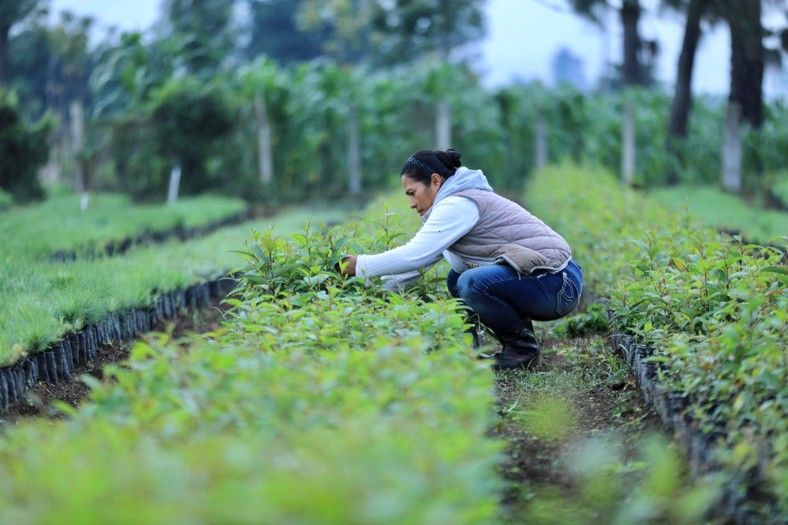
In Guatemala, women usually stay at home to care for their children and many have limited educational opportunities. What is beautiful about this project is that, since the planting process begins from the seed or shoot, all the delicate, fine work—requiring great manual care—is entrusted to women.
They carry out this entire initial phase: transferring the newborn plant to a larger bag, nurturing it, and protecting it. The men’s work begins when the plants are strong enough to be transported and planted in the field. It is an inclusive project that supports women, who are paid for their work, acquire skills, and gain a role within the community.
– You are deeply involved in the “WUCWO Planting Hope” campaign. How would you encourage others to participate?
This year Italy experienced a dramatic situation: more than 77,000 hectares of forests burned due to high temperatures and drought, 60% more than the average of the last 20 years.
Facing this reality, I am encouraging a group of friends—teachers, artisans, lawyers, doctors, pharmacists, nurses—to plant at least one tree.
Since we are in Castel Gandolfo, and both Pope Francis and the new Pope Leo insist on caring for our common home, this gesture takes on even more meaning. We are organizing for each of us to plant a tree wherever possible. We believe the gesture is key: small actions can inspire others.
In Italy, bureaucracy is complex; we cannot simply plant a tree in a park without permits. That is why we are making use of school grounds, from nursery schools to universities. A class can plant a tree and care for it throughout their school years. This instills in children the beauty of such a gesture.
We are making use of school grounds, from nursery schools to universities. A class can plant a tree and care for it throughout their school years. This instills in children the beauty of such a gesture.
– Finally, if you could dream big: what would you like to happen thanks to this initiative? What is your dream?
“WUCWO Planting Hope” is still a dream with a four-year timeframe: it began in 2023 and will end in 2027. My dream is for this initiative to become a habit, and for more people to join each year, understanding that what matters is not only planting a tree but caring for it, accompanying it in its growth, and ensuring it becomes strong—capable of giving life and hope to future generations.
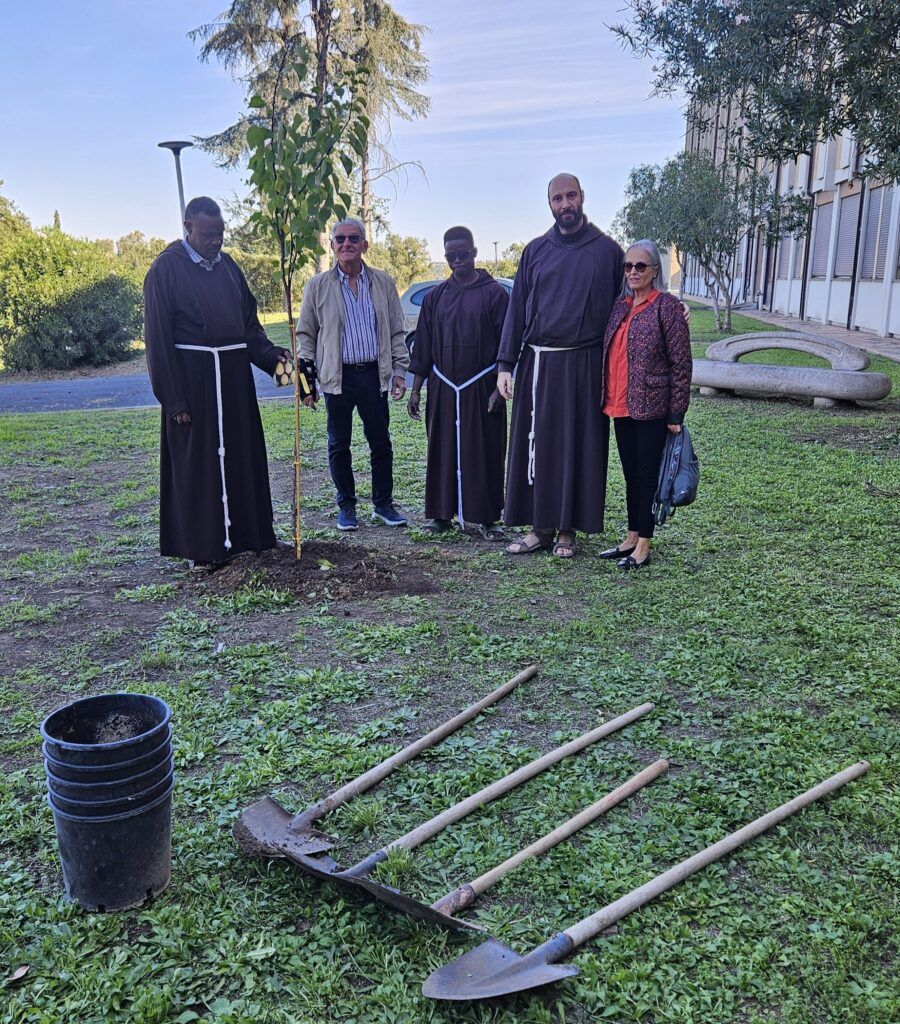
🌿 Tree donation on the feast of Saint Francis of Assisi
On the occasion of the feast of Saint Francis of Assisi, on October 4th, Adelina Viteri, representing the donation made by several women and friends of WUCWO, delivered five fruit trees to the International College San Lorenzo da Brindisi in Rome, where 90 Capuchin friars reside.
This gesture expressed the shared commitment to caring for our common home and gratitude for the gift of creation, as well as the strong commitment of WUCWO women to promoting integral ecology.