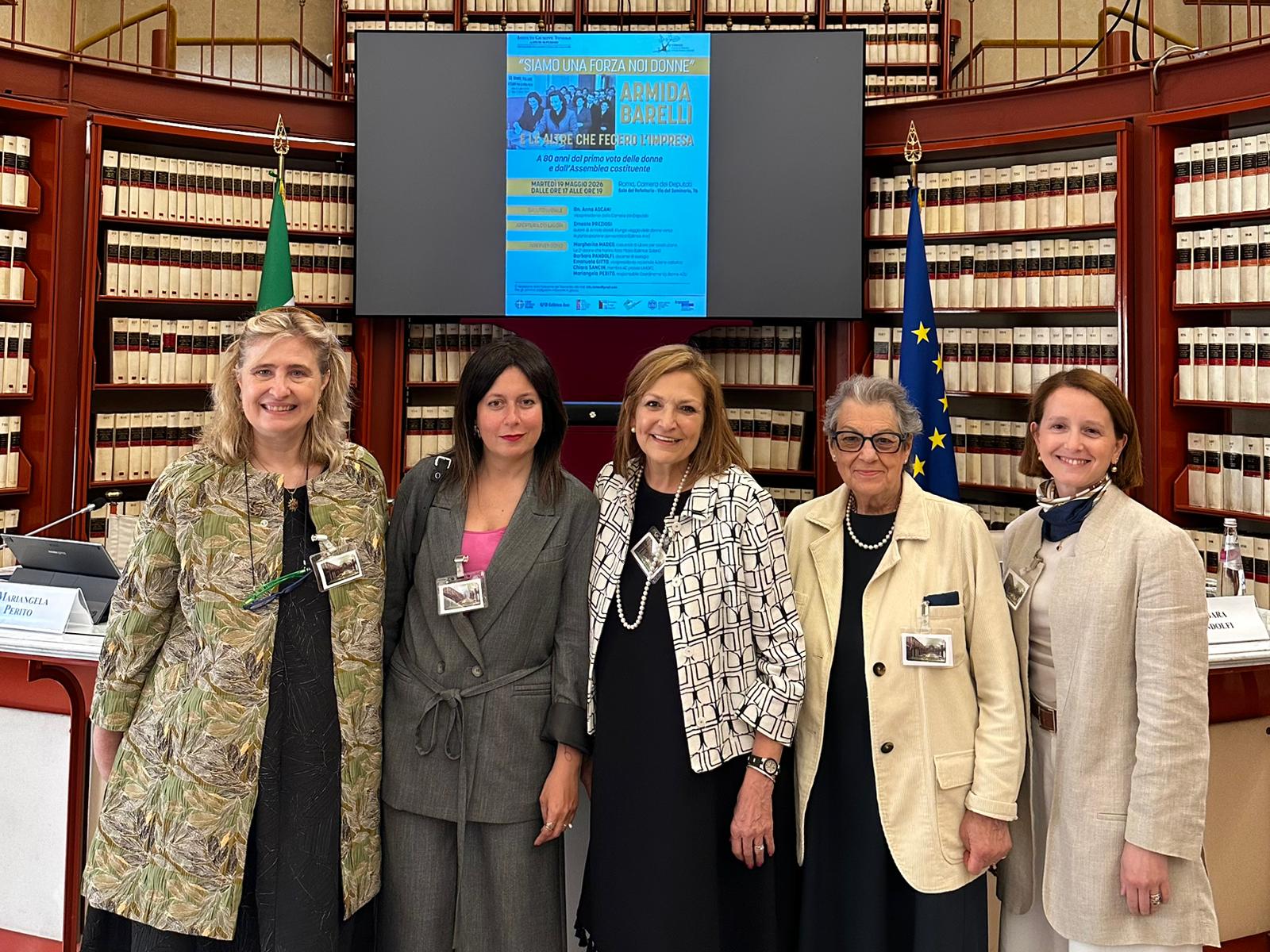
On the occasion of the celebration of WUCWO Day, which this year marks 116 years committed to peace, the Italian member associations are launching a joint message to reaffirm the fundamental role of women in building a more just, inclusive, and peaceful society.
Below, the official message:
We join this day not only symbolically, but by practicing peace every day and spreading a culture that recognises it as a concrete, daily, and profoundly political choice.
Peace, indeed, is not merely the absence of war: it is a dynamic, participatory process that requires dialogue, social justice, freedom, and respect for human dignity. Peace is the ultimate expression of the “common good.”
Throughout history, many women – often silently and invisibly – have built paths to peace through lives marked by resistance and hope. Even when excluded from official roles, they have been able to influence reconciliation processes, thanks to female solidarity and the ability to act within social and civil contexts.
Yet, the data remains alarming.
Twenty-five years after the United Nations proposal, UN Security Council Resolution 1325 on “Women, Peace and Security” – which enshrined the role of women in peace processes by introducing the priorities of participation, prevention, protection, and peacebuilding – their presence remains marginal: in 2025, nine out of ten peace processes did not include any female negotiator; women represent only 7% of negotiators and 14% of mediators globally.
This exclusion deprives peace processes of a vital resource: a perspective capable of generating more inclusive, creative, and lasting solutions. There can be no universal peace without the full participation of women in decision-making processes, institutions, and social life.
Promoting women’s rights, their freedom, and their participation means building the very foundations of peace. Female freedom is an essential indicator of the democratic quality of a society.
Attributing a specific role to women in peacebuilding does not mean reducing or simplifying it, but rather recognising skills acquired also through experiences of care, mediation, listening, and relationship-building. These are capabilities that foster a culture of encounter, welcoming, and conflict resolution.
Peace does not stem from an abstract idea, but from concrete lives, lived through and transformed. It is not mere wishful thinking, but political responsibility: it means working for social justice, for rights, and for the dignity of every person.
As associations, we envision our spaces as places to practice peace: in words, in relationships, and in daily conflicts. Places of dialogue, discussion, and sisterhood, where we are actively present in local areas, amidst problems, and through hardships. It is there that peace takes shape.
As Pope Francis reminds us, the world “needs to look to mothers and women to find peace, to break free from the spirals of violence and hatred,” and in his exhortation Gaudete et exsultate he emphasizes the value of the “feminine genius” as an indispensable resource for our time. Similarly, on November 30, 2025, during his journey to Lebanon, Pope Leo XIV emphasized “the essential role of women in the demanding and patient effort to safeguard and build peace (…) women have a specific capacity to bring about peace, because they know how to cherish and develop deep bonds with life and with people. Their participation in social and political life, as well as in that of their own religious communities, much like the energy that comes from the young, represents a factor of true renewal worldwide.”
Today more than ever, we feel the urgent need to build a culture capable of overcoming the divisive logic of “us” and “them,” promoting common yet, at the same time, plural belongings.
Only in this way will it be possible to reduce tensions and generate authentic relationships.
Peace is fragile and invisible, but profoundly concrete: it manifests in bodies, in emotions, and in the relaxed faces of those living reconciled relationships.
As women, as associations, we choose to be there. Because peace is not a distant utopia, but a present responsibility.
The Italian associations affiliated to WUCWO:
ACLI-Coordinamento Donne
Azione Cattolica Italiana
Centro Italiano Femminile
Convegni di Cultura Maria Cristina di Savoia
Associazione Donne in Vaticano
Movimento Donne UCID