Indonesia is the fourth most populous country in the world with a population of over 275 million
inhabitants and it comprises more than 17,000 islands and over 300 ethnic groups. It can be stated that it is
a nation where cultural, linguistic and religious plurality shapes daily life. Indonesia is home to the largest
Muslim population globally, still the State officially recognises six religions: Islam, Protestantism,
Catholicism, Hinduism, Buddhism and Confucianism, offering a unique context in which interreligious
coexistence is lived daily.
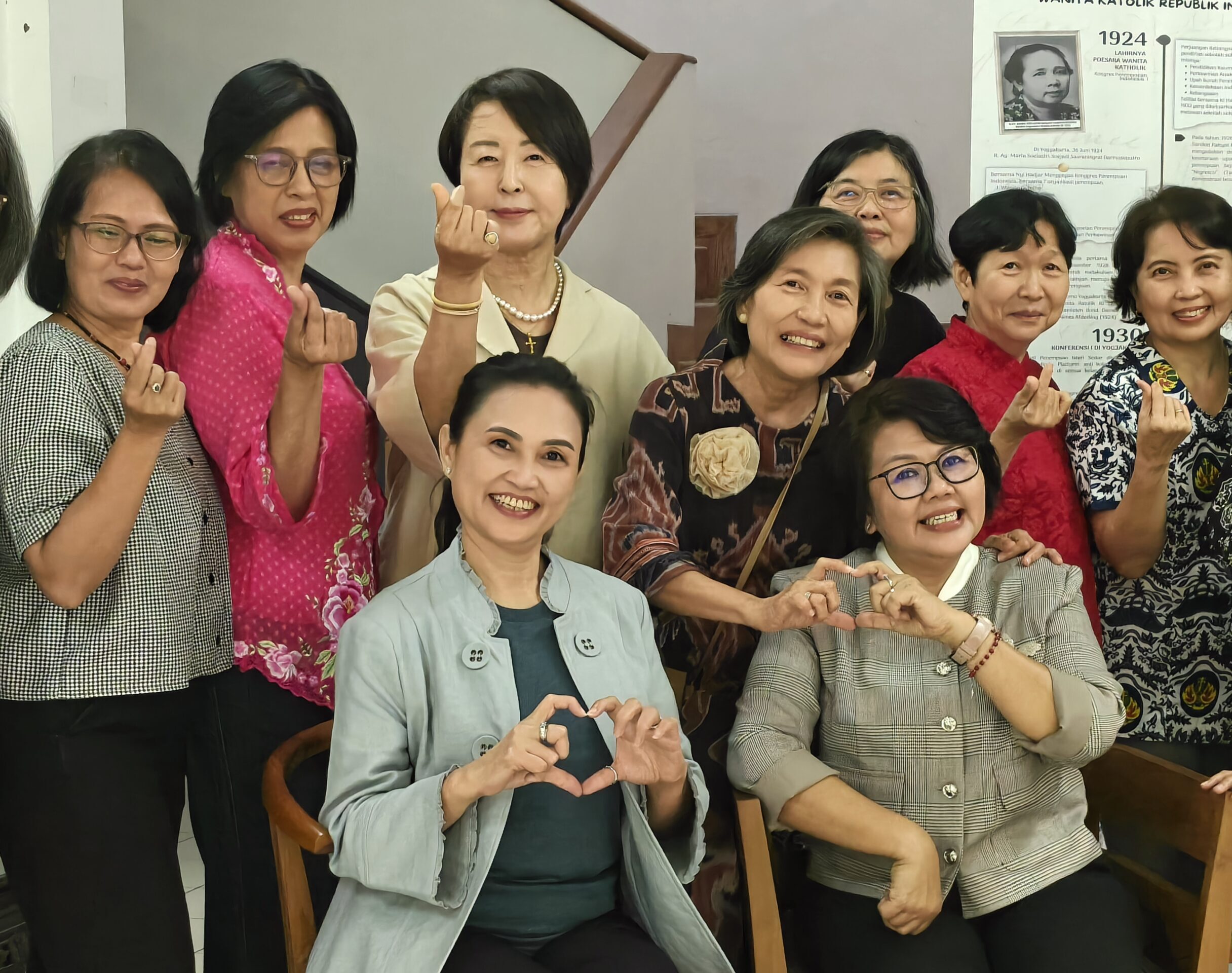
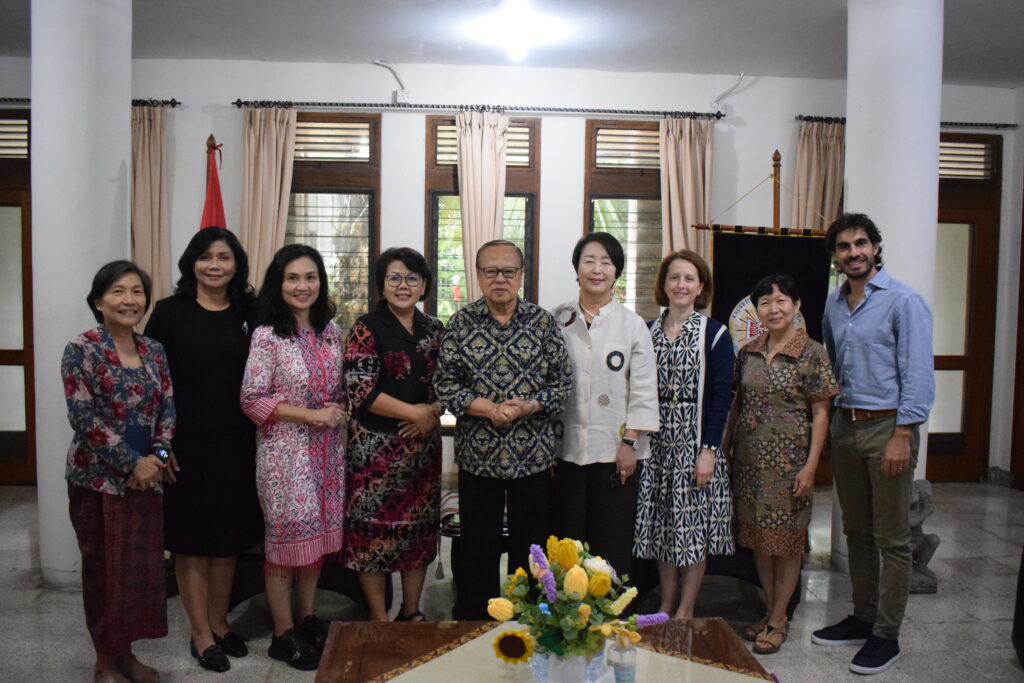
In this rich and complex setting, I had the opportunity to travel to Jakarta and Bandung together with the
Vice President General of WUCWO, Isabella Park and my colleague from WUCWO’s Women Observatory,
Patricio Caruso. This visit was accurately planned together with our member organisation Wanita Katolik
Republik Indonesia (WKRI) and it marked an important step forward in strengthening our collaboration and
the first steps of WUCWO’s “active listening” of vulnerable women in Indonesia.
The promotion of women’s dignity lies at the heart of the mission of WKRI which was founded in 1924. It is
an independent and socially engaged organisation, endowed with strong moral values and proven capacity
to carry out service-oriented work aimed at fostering the common good and upholding human dignity.
During our visit, we experienced the generosity, professionalism and deep commitment of WKRI. Their
extensive network, spanning the entire country through diocesan and parish structures, enables them to
remain close to the realities faced by women in very diverse contexts. Their work is a concrete expression
of a Church that is present, attentive and engaged.
Our aim was to create the basis for our one-year project “Violence and discrimination against women in
Indonesia” that we are carrying out thanks to the support of One Heart One Body. Our intention is to
understand how gender-based violence (GBV) in Indonesia is interconnected with environmental
degradation, extractive industries and climate change. The country presents a critical context for such
reflection. While important legislative and policy efforts have been made, violence against women remains
a pressing and complex issue, often exacerbated by economic inequality, cultural norms and environmental
pressures.
Through a series of expert meetings, focus groups and institutional encounters held in Bandung and
Jakarta, we engaged with a wide range of stakeholders. These included a delegation from the National
Commission on Violence Against Women, representatives of public institutions, academics, civil society
organisations, and Catholic Church representatives. We also had the valuable opportunity to meet Catholic
women from the Bogor region, from Bandung, Jakarta, Yogyakarta and East Java, together with the Spiritual
Advisor of WKRI. These exchanges highlighted both the diversity of contexts and the shared challenges
faced by women across the country.
Among the many encounters, always kindly opened by a warm “selamat pagi” (good morning), one that
particularly marked me was the meeting with Mons. Paulus Budi Kleden, Archbishop of Ende since 2024.
His testimony provided a concrete insight into the lived realities of communities in regions such as the
island of Flores, where Catholics form the majority. Mons. Budi spoke of the complex impact of geothermal
energy projects on local populations, particularly on women. Despite being presented as sustainable
development, these initiatives often generate deep social and environmental tensions. Women, he told us,
are frequently not included in consultations and decision-making processes, even though they are among
those most affected. Environmental degradation, affecting water quality, air, agriculture and housing, has
direct consequences on family life and health.
He also highlighted how economic compensation mechanisms, when not accompanied by adequate
guidance, can lead to further vulnerability. Families may sell their land without support in managing
resources, while traditional livelihoods, especially those linked to agriculture and in which women play a
central role, are disrupted. This can lead to migration, precarious work and, in some cases, exposure to
human trafficking.
Particularly striking was his observation of the social tensions and polarisation that can arise within
communities, as well as the persistence of cultural dynamics in which women’s voices are not sufficiently
heard. In some cases, when women speak out, whether on environmental issues or domestic violence, they
may face additional risks or marginalisation. His testimony demonstrated his close engagement with these
challenges, with the local communities and the importance of an integral approach, in line with the vision
proposed in Laudato Si’, where care for creation and care for people, especially the most vulnerable, are
inseparable.
Beyond the formal programme, the visit also offered powerful signs of Indonesia’s culture of coexistence
and mutual respect. In Jakarta, we visited the area surrounding the Istiqlal Mosque, the largest mosque in
Southeast Asia, located directly opposite the Jakarta Cathedral. This proximity is a striking symbol of
interreligious harmony. There is a “Tunnel of Peace” connecting the mosque and the cathedral, conceived
as a concrete expression of dialogue and fraternity, and blessed by Pope Francis. In addition, simple but
meaningful gestures sustain this coexistence in daily life: on Fridays, the Catholic Cathedral offers its
parking spaces to Muslim faithful for prayer, while on Sundays this gesture is reciprocated for the Catholic
community.
See more photos here: https://flic.kr/ps/46z3yc
Although ourt visit was limited to Jakarta and Bandung, it allowed us to lay strong foundations for future
work. WKRI’s presence across most dioceses, including more remote and complex areas, give us the
possibility to reach women and communities at the grassroot level. This trip reaffirmed WUCWO’s richness,
its ability to reach grassroots communities, establishing direct contact with local realities and creating
opportunities to learn and give visibility to the most vulnerable. I return deeply grateful for the welcome
received and inspired by the dedication of WKRI and all those we encountered. Their witness reminds us
that lasting change is built through dialogue, collaboration, and a shared commitment to human dignity. As
members of the same Church, we walk together in the same mission, each of us sharing responsibility for
supporting the vocation, mission, and evangelisation of women.
Lavinia Rocchi Carrera
Secretary General