Dear friends,
I recently heard a phrase that left me thinking a lot: “We have stopped dreaming about the future and started fearing it”. I cannot deny that one of my greatest concerns recently has been the absence of peace. And this is inevitable, because there are many things around us that lead me to this constant worry. I turn on the television or read the news and see political confrontation within and between countries, the war that entire nations are suffering, persecution on ethnic or religious grounds, the ravages of organised crime, the genuine ‘hunts’ for migrants, attempts of interventionism, etc. I access social media and perceive a climate of permanent tension, where the fear of being “cancelled”, excluded or disqualified seems to be ever-present. I will not hide from you that this environment, so often inflammatory, leads me on more than one occasion to fear.
Where are we headed? I think of our sisters in Venezuela, Cuba, various countries in Africa and so many other nations, including parts of my own country, who are experiencing complex political and social situations. But I also think of those who suffer more silent and hidden forms of violence: domestic violence, abuse in the workplace, discrimination, loneliness, human trafficking, and all those other ways in which human dignity is wounded and peace seems far away.
In this context, the words of Pope Leo XIV, in his Message for Peace 2026, resonate strongly when he reminds us that:
“Peace exists; it wants to dwell within us. It has the gentle power to enlighten and expand our understanding; it resists and overcomes violence. Peace is a breath of the eternal: while to evil we cry out “Enough,” to peace we whisper “Forever.” And he exhorts us: «Let us welcome it and recognize it, rather than believing it to be impossible and beyond our reach».
The Holy Father speaks to us of an ‘unarmed’ and ‘disarming’ peace, a humble and persevering peace that begins in the heart. A peace that comes from God, who loves us all unconditionally. He warns us of the danger of becoming accustomed to violence, of justifying it even with religious or ideological arguments, and invites us to a true inner disarmament: of the heart, of the mind and of life. ‘Goodness is disarming,’ he says. ‘Perhaps that is why God became a child.’
This is undoubtedly a priority issue in his pontificate. In his first blessing to the world, as Successor of Peter, he gave us a greeting that I would like to recall today:
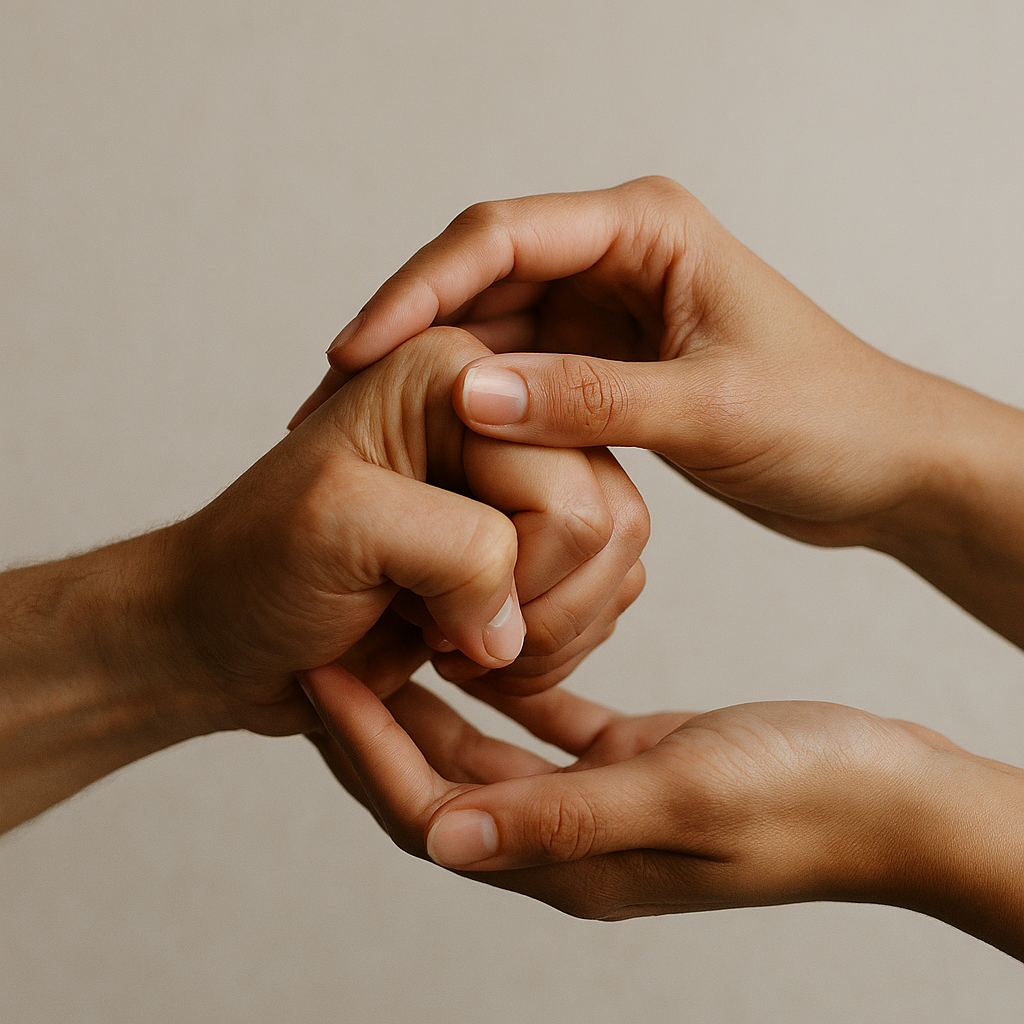
“Peace be with you all! I would like this greeting of peace to resound in your hearts, in your families, among all people, wherever they may be, in every nation and throughout the world. This is the peace of the risen Christ, a disarmed and disarming peace [ …] God loves us all, and evil will not prevail. We are in God’s hands. Therefore, without fear, united, holding hands with God and with one another, let us move forward.”
These hopeful and meaningful words deeply illuminate the path of WUCWO and our resolutions. We are called to be women who, working together in faith and love to the Lord and our brothers and sisters, build bridges: in our families, in our communities, in society; women who promote dialogue, including ecumenical and interreligious dialogue; who care for creation as our Common Home; who defend the dignity of every person and protect especially the most vulnerable; who work for religious freedom, non-discrimination and a culture of encounter. Our service, often silent, is already a concrete way of building that disarmed and disarming peace of which the Pope speaks.
Come on! Let us redouble our efforts in these difficult times in which, through the perseverance of His witnesses, God’s work continues in the world, becoming even more perceptible and luminous in the darkness of the times. As the Holy Father tells us: ‘Seeing the light and believing in it is necessary in order not to sink into darkness.’ Let us therefore continue to work in this great worldwide network of Catholic women’s organisations, united in mission, transforming lives with our message and witness of peace, and always with our firm hope placed in the Lord.
Aware that peace, before being a goal, is a presence and a path, I would like to conclude by inviting you—and myself—to a little personal examination of conscience:
Am I allowing polarisation to dwell in my heart? Do I feel more strongly what separates me from others than what unites me with them? Do I seek to understand before judging, to dialogue before imposing? Do I first seek what unites me with others and then respect our differences?
It is undoubtedly a good time to ask our patroness of WUCWO, Mary, Queen of Peace, to bring peace to the world and to give us the ability and humility to see if at any time we are not being bridges of unity and witnesses of peace, so that we may rectify our path.
Mónica Santamarina
WUCWO President General