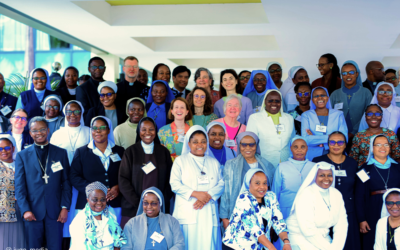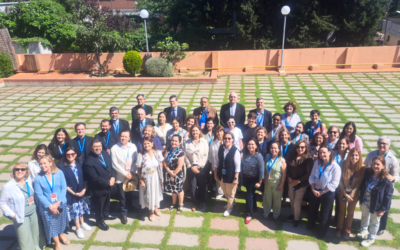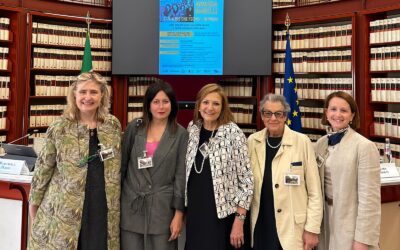
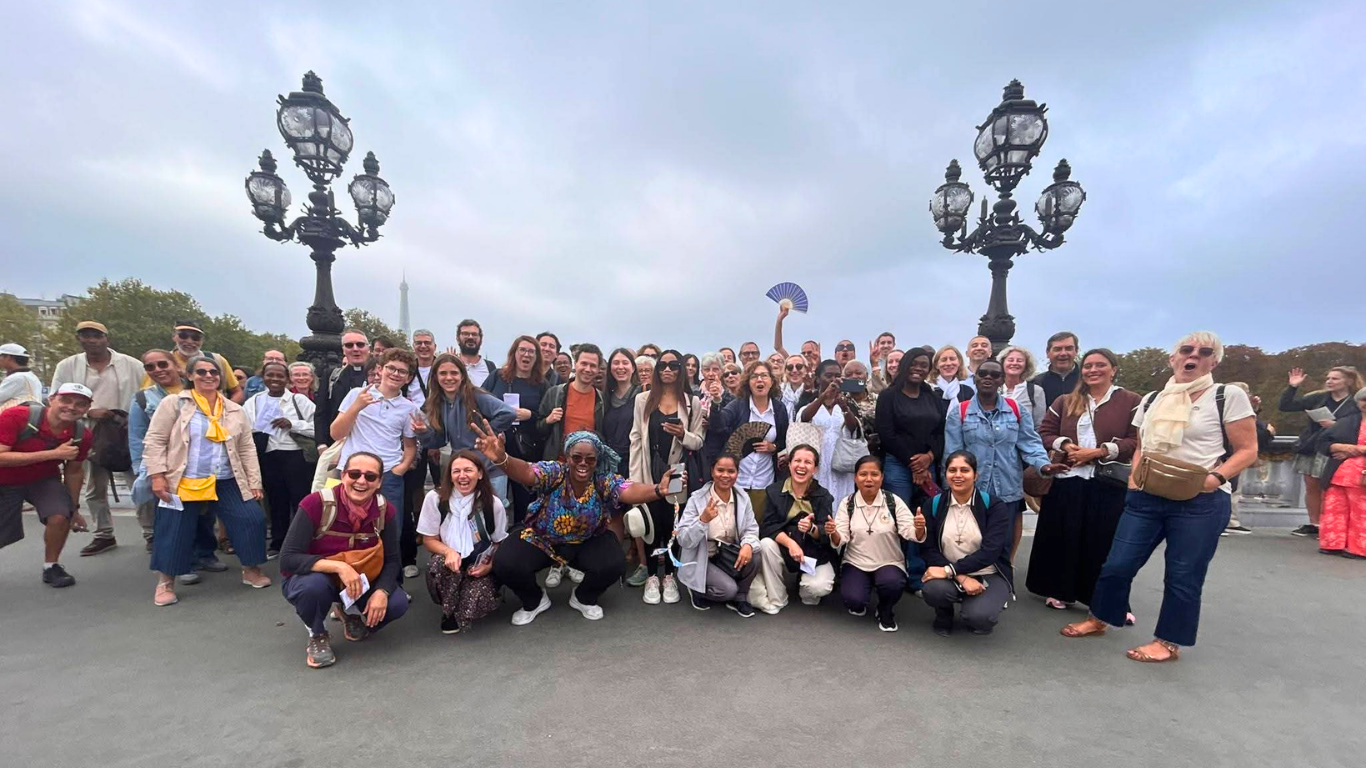
Catholic women in France made the pilgrimage alongside their respective dioceses. Others followed the four days of the visit on television from their homes. Many channels broadcast the events, including the public service broadcaster. They were touched by Pope Leo XIV, by his simplicity and his kind, welcoming gaze that warms the heart.
In his various speeches, delivered at the Élysée Palace and UNESCO, the Pope highlighted that “diversity of origins helps invigorate democratic life and enrich the art of living together”. He also spoke about artificial intelligence (AI), emphasising that although it is a form of progress already present in our lives, it must not replace the human person.
The television broadcast of the prayer vigil for young people at the Stade de France, featuring prayers, songs and a theatrical performance, offered an extraordinary evening that revealed a spirit of youthful enthusiasm that does the heart good.
In his opening remarks at the Élysée Palace, Leo XIV paid tribute to the people of the country he was visiting. Later in his address, he stressed the importance of dialogue, which he considers particularly necessary in France today, where people from different cultures and religious traditions live side by side and are called to participate together in building society.
In his speech at UNESCO, he spoke at length about the human person, both beautiful and fragile. He also recalled that, for Christians, “the mystery of the human person finds its full light in Christ” (cf. Second Vatican Council, Gaudium et spes, 22).
Excerpts from his speech at UNESCO:
*“No education is complete if it does not address the question of meaning. In this same speech, Saint John Paul II reminded us that to educate is to help the human person ‘be’ more, and not merely ‘have’ more.
Secondly, we are all born naked and in need. We are poor from birth; we need bread and words, attention and affection—that is, everything that nourishes both body and spirit.”*
Regarding the encyclical Magnifique Humanité, he tells us:
“I considered it essential to address the topic of artificial intelligence in my first encyclical letter, in order to place the human person at the centre of all reflection. So that we do not lose our humanity amid the ‘paradise of machines’ that invade and shape our daily lives, it is urgent to educate minds in ethical discernment, enabling them to recognise what is morally good.”
We can draw a parallel with the development of the automobile, which led to the creation of road traffic regulations. The aim, therefore, is not to prevent progress, but to ensure that innovation remains at the service of the human person, within a framework that is safe, transparent and respectful of our rights.
It is worth noting that “in 2024, the European Union adopted a regulation on artificial intelligence, the AI Act, to regulate the use of AI according to the risks it poses and to protect fundamental rights.”
Source: https://eur-lex.europa.eu/legal-content/EN/TXT/?uri=CELEX%3A32024R1689
Action Catholique des Femmes (ACF)
Translated with ChatGpt